


Bangkirai Decking in Bali: The Ultimate Guide to Choosing the Right Tropical Hardwood
The #1 Hardwood for Outdoor Decking in Bali And Most People Don't Know Why You're designing a deck. Maybe it's poolside. Maybe it's an open terrace for a Bali villa. And you're stuck choosing between teak, ironwood, and a dozen other tropical species. Here's the truth: Bangkirai is the most underrated decking wood in Southeast Asia. Tough as iron. Affordable. Naturally resistant to Bali's extreme humidity. And available in reclaimed form so you build without guilt. This guide breaks down everything you need to know before you choose your decking material.
5/4/20264 min read
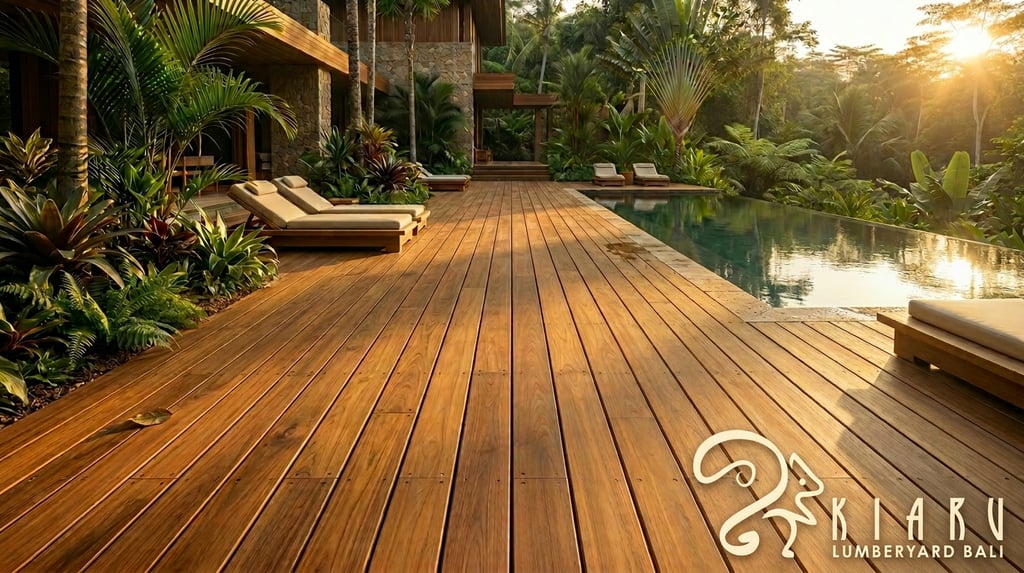
What Is Bangkirai Wood?
Bangkirai (Shorea laevis) is a Southeast Asian tropical hardwood, also known as Yellow Balau in international markets. It grows primarily in Kalimantan, Sumatra, and Malaysia.
It belongs to the Shorea family the same family that includes some of the world's most durable construction hardwoods.
Key Technical Specs
PropertyBangkiraiJanka Hardness~1,925 lbfDensity870–1,100 kg/m³Durability ClassClass 1–2 (Very Durable)Natural Oil ContentHighColor (fresh)Yellow-brownColor (aged)Silver-grey patina
Bottom line: Bangkirai is approximately 2x harder than most softwoods and outperforms many tropical species in outdoor environments.
Why Bangkirai Is Bali's Go-To Decking Wood
Bali's climate is unforgiving for wood. You're dealing with:
90%+ humidity during rainy season
UV radiation year-round
Salt air in coastal areas
Termites and insects at every elevation
Bangkirai handles all of it naturally, without chemical treatment.
✅ 5 Reasons Architects & Builders Choose Bangkirai
1. Exceptional Hardness Its tight grain and high density make it naturally resistant to denting, scratching, and heavy foot traffic. Perfect for pool decks, terraces, and high-traffic hospitality areas.
2. Natural Weather Resistance Bangkirai contains natural resins that resist moisture absorption. Unlike softer woods, it won't warp or crack with Bali's wet-dry cycles.
3. Termite & Insect Resistance Its dense cellular structure makes it extremely difficult for termites to penetrate a critical advantage in Bali's tropical environment.
4. Longevity Properly installed Bangkirai decking can last 25 to 40 years with minimal maintenance. That's decades of ROI on your investment.
5. Aesthetic Versatility Fresh Bangkirai has a warm golden-yellow tone. Left untreated, it weathers to a sophisticated silver-grey a look that's trending hard in contemporary Bali villa design right now.
Reclaimed vs. New Bangkirai: Which Should You Choose?
This is the question every builder asks us.
New Bangkirai
Consistent color and dimensions
Easier to source in large quantities
Slightly higher moisture content on delivery
Great for standardised, large-scale projects
Reclaimed Bangkirai
Naturally pre-dried and pre-aged over decades
Denser grain = superior structural stability
Unique aesthetic: no two boards are identical
Eco-responsible: zero new deforestation
Slightly more variable in dimensions needs expert grading
📉 According to the WWF, reusing 1m³ of timber can prevent up to 1.1 tonnes of CO₂ emissions. Choosing reclaimed Bangkirai isn't just a design choice it's a climate decision.
Our recommendation at Kitaru? If your project allows for it, reclaimed Bangkirai is almost always the smarter long-term choice in durability, sustainability, and character.
The verdict? Bangkirai hits the sweet spot between performance, cost, and sustainability. It outperforms composite materials on every metric that matters, at a fraction of the price of teak or ironwood.
How to Install Bangkirai Decking: 5 Key Best Practices
Getting the installation right is just as important as choosing the right wood. Here's what your contractor needs to know:
1. Acclimatize before installation Let the boards sit on-site for at least 48–72 hours before fixing. This allows the wood to adjust to local humidity and reduces post-installation movement.
2. Use stainless steel or coated screws Standard steel screws will rust and stain Bangkirai. Always use stainless steel or coated deck screws the tannins in tropical hardwoods accelerate corrosion.
3. Pre-drill pilot holes Bangkirai is dense. Pre-drilling prevents splitting, especially near board edges. Drill at least 2.5 cm from the edge of each board.
4. Leave expansion gaps Allow 3–5 mm gaps between boards for ventilation and drainage. This prevents moisture retention and board warping in Bali's rainy season.
5. Apply an oil finish (optional but recommended) If you want to preserve the golden colour, apply a UV-resistant decking oil every 12–18 months. If you prefer the natural silver-grey weathered look, simply leave it untreated and let nature do its work.
How to Identify Quality Bangkirai at the Lumberyard
Not all Bangkirai is equal. Here's what to look for when sourcing your boards:
Grain density: Tight, even grain = higher quality and durability
Color uniformity: Natural variation is expected excessive blue/black staining signals poor drying
No surface cracking: Minor end checks are acceptable; deep surface cracks are a red flag
Weight: Quality Bangkirai is heavy. If a board feels light, it may have been poorly dried or mis-graded
Documentation: Always ask for origin documentation especially for reclaimed material. Legal sourcing from East Kalimantan or Java should be fully traceable
At Kitaru, every batch of reclaimed Bangkirai comes with verified origin documentation. No guesswork. No greenwashing. Just genuine sustainable hardwood.
Common Questions About Bangkirai Decking
Does Bangkirai need to be treated?
No chemical treatment is required for structural durability. An oil finish is optional if you want to maintain its golden color.
Is Bangkirai slippery when wet?
When planed smooth, it can be. Request grooved or brushed boards for poolside or wet-area applications the textured surface dramatically improves grip.
How does Bangkirai compare to composite decking?
Composite may seem easier but it degrades under intense UV, can't be refinished, and ends up in landfill. Bangkirai lasts 2–3x longer and is fully natural and biodegradable.
Can Bangkirai be used for indoor flooring?
Yes though it's primarily used outdoors. Its density and hardness make it suitable for high-traffic interior flooring too, with the right finish.
Where to Source Reclaimed Bangkirai in Bali
You have two choices: generic suppliers who can't tell you where the wood came from or a trusted lumberyard that gives you full traceability, expert grading, and the right hardware to go with it.
At Kitaru Lumberyard Bali, we specialise in sourcing and preparing the highest-quality reclaimed Bangkirai for decking, flooring, cladding, and structural applications across Bali and beyond.
📍 Visit our showroom: Jl. Pantai Saba No.47509, Saba, Blahbatuh, Gianyar, Bali 80581
🕘 Open: Mon–Fri 8:30AM–4:30PM | Sat 8:30AM–12PM
📞 WhatsApp us: +62 0823 4248 1388 (WA)
The Bottom Line
Bangkirai is not a compromise. It's a deliberate choice made by experienced architects, builders, and eco-conscious homeowners who know what performs in Bali's tropical climate.
Hard. Durable. Beautiful. Sustainable when sourced right.
If you're starting a decking project and want honest advice on species, dimensions, and quantities come talk to our team. We'll help you get it right from the start.
👉 Contact Kitaru — Get a Free Quote for Your Decking Project
Visit the Showroom
Jl. Pantai Saba No.47509, Saba, Kec. Blahbatuh, Kabupaten Gianyar, Bali 80581
Contact Us
Via the Contact page
By email:
info@kitaru-lumberyard-bali.com
By phone:
(+62) 0823 4248 1388 (WA)
Showroom Hours:
Mon to Fri: 8.30AM – 4.30PM
Sat: 8.30AM – 12 noon
(closed Sundays)
Copyright© 2024-2026 PT-PMA BNM Management Solutions. All rights reserved.
Trusted source for sustainable hardwood and quality hardware. We offer reclaimed Bangkirai, Meranti, Teak, and Kapur, plus exclusive decorative pieces in reclaimed Ulin from our partners. Supplying top-tier decking, flooring, and more—get the best quality at the best price.