


Kapur Wood: The Ultimate Guide to This Underrated Tropical Hardwood for Bali Construction
The Tropical Hardwood Nobody Talks About But Every Builder Should Know You're sourcing timber for a Bali project. Budget matters. Performance matters even more. Teak is premium priced. Bangkirai is well-known. But Kapur? It quietly ticks every box durability, weather resistance, workability, cost efficiency and most architects don't even have it on their radar yet. That's your competitive edge. And this guide is your shortcut.
5/11/20265 min read
What Is Kapur Wood?
Kapur (Dryobalanops spp.) is a Southeast Asian tropical hardwood, native to Borneo, Sumatra, and the Malay Peninsula. Its name literally means "camphor" in Malay a nod to its distinctive resinous scent when freshly cut.
It belongs to the Dipterocarpaceae family, making it a close relative of other premium tropical hardwoods used widely across Indonesia.
Key Technical Specs
PropertyKapurJanka Hardness~1,490 lbfDensity700–900 kg/m³Durability ClassClass 2–3 (Durable)Natural Resin ContentModerate to HighColor (fresh cut)Reddish-brownColor (aged)Deep warm brownTextureFine to moderately coarse grain
Bottom line: Kapur delivers near-teak performance at a fraction of the price making it one of the best value-for-money tropical hardwoods available in Bali today.
Why Kapur Is Gaining Ground in Bali's Construction Scene
Bali's construction market is evolving fast. Architects and developers are under pressure to deliver:
Sustainable materials with traceable origins
Durable outdoor performance under tropical sun, rain, and humidity
Competitive pricing without sacrificing quality
Visual warmth that fits Balinese and contemporary tropical aesthetics
Kapur answers all four. Here's why.
✅ 5 Reasons Smart Builders Are Choosing Kapur
1. Outstanding Natural Durability Kapur's moderate-to-high resin content gives it natural resistance to decay, fungi, and moisture critical in Bali's wet-dry climate cycles. It performs reliably in outdoor and semi-exposed environments without heavy chemical treatment.
2. Excellent Workability Unlike some ultra-dense hardwoods, Kapur machines, saws, and finishes with ease. Its fine grain responds well to planing and profiling ideal for detailed joinery, cladding profiles, and staircase elements.
3. Termite & Fungi Resistance Kapur has natural resistance to decay, making it an excellent option for outdoor and semi-exposed uses. Its inherent resistance to termites and fungi makes it a reliable material for construction and long-lasting woodwork.
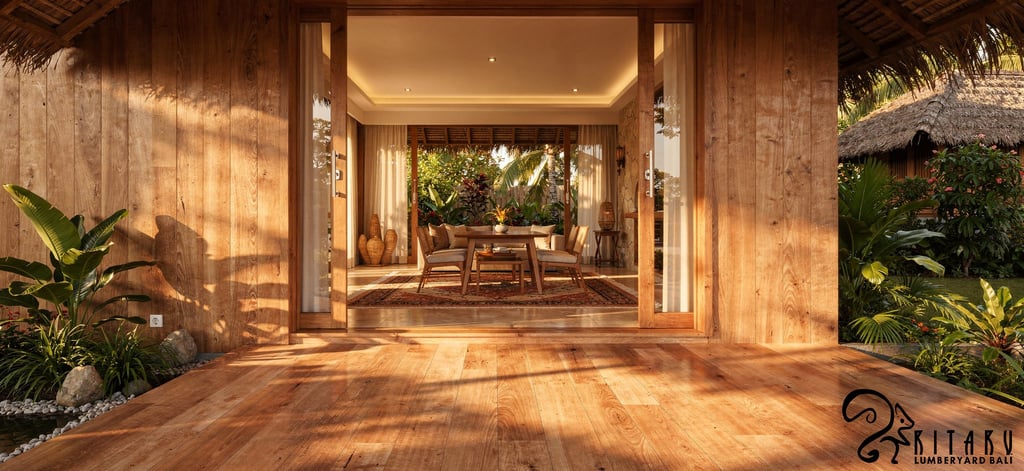
4. Aesthetic Versatility Kapur is a high-quality Southeast Asian hardwood prized for its durability, workability, and attractive reddish-brown hue. Its fine grain and easy machining make it a favorite for interior carpentry, from flooring and staircases to furniture and cabinetry. Whether used indoors or outdoors, Kapur offers a warm, natural look that enhances traditional and modern designs alike.
5. Cost-Effective Premium Quality Kapur is a versatile and cost-effective choice, striking the perfect balance between strength and aesthetics. It gives project owners a genuine hardwood solution without the premium price tag of teak or ulin.
Where to Use Kapur Wood: Top Applications in Bali Projects
Kapur is a workhorse. Its balanced profile strong, workable, attractive makes it suitable across a wide range of applications:
🏗️ Structural & Exterior Applications
Roofing battens resists moisture and warping under tile loads
Exterior cladding weathers gracefully in Bali's tropical climate
Window frames & door surrounds stable and termite-resistant
Pergolas & outdoor structures holds screws and bolts reliably
🏠 Interior Applications
Hardwood flooring warm reddish-brown tones add depth to any interior
Staircases density and hardness hold up under daily foot traffic
Interior paneling & wall cladding fine grain takes stains and oils beautifully
Furniture & cabinetry easy to shape, carve, and finish
🎯 Design tip: Kapur's reddish-brown hue pairs exceptionally well with Bali's natural stone textures particularly volcanic basalt and pale sandstone creating that layered, organic aesthetic trending heavily in contemporary tropical minimalism right now.
Reclaimed Kapur vs. New Kapur: What's the Difference?
Just like teak and bangkirai, Kapur is available in both new and reclaimed form. The difference matters especially in Bali.
New Kapur
Consistent dimensions, easier to source in bulk
Slightly higher moisture content on arrival
Ideal for large-scale structural projects with standardised specs
Reclaimed Kapur
Pre-dried and pre-aged over decades superior dimensional stability
Denser grain structure from decades of natural compression
Unique character: each board tells a story
Zero new deforestation the eco-responsible choice
Requires expert grading for dimensional consistency
Reclaimed wood is salvaged from old buildings, bridges, and industrial sites, then repurposed for new projects. It's an eco-friendly choice that reduces deforestation while offering durability and unique character that new wood often lacks.
📉 According to WWF, 1 m³ of reused wood can prevent 1.1 tons of CO₂ emissions. Choosing reclaimed Kapur isn't just a design decision — it's a climate statement.
The verdict? Kapur sits in a unique sweet spot: harder and more durable than Meranti, more workable than Bangkirai, and a fraction of the price of Teak. For cladding, roofing, and interior carpentry projects, it's often the smartest choice on the table.
How to Identify Quality Kapur at the Lumberyard
Not all Kapur is graded equally. Use this checklist before you buy:
Color consistency: Fresh Kapur should show a uniform reddish to pinkish-brown. Avoid boards with excessive blue-grey staining a sign of poor drying or fungal exposure.
Grain tightness: Tight, even grain = better durability and finish quality
Surface check: Minor end checks are normal; deep surface cracks indicate poor drying or handling
Weight: Quality Kapur feels dense and solid. Light boards signal under-dried stock
Camphor scent: Fresh Kapur has a faint resinous scent a natural quality indicator
Origin documentation: Always request verified sourcing paperwork. Legal reclaimed Kapur from Kalimantan or Java should come with full traceability
At Kitaru Lumberyard Bali, every batch of reclaimed Kapur comes with verified origin documentation from East Kalimantan and Central Java. Unlike many suppliers, we provide verified origin documentation, ensuring true sustainability and ethical sourcing. No more uncertainty just authentic, reclaimed tropical hardwood you can trust.
Installation Tips for Kapur Wood
Whether you're using Kapur for cladding, flooring, or roofing battens, these best practices apply:
1. Acclimatize before fixing Leave boards on-site for 48–72 hours before installation. Kapur adjusts well to local humidity give it time to stabilise.
2. Pre-drill for fastenings Kapur's density means pre-drilling prevents splitting, especially near board edges. Use two screws per board at each joist for a secure hold. Screw at least 2.5 cm from the board edge to prevent splitting.
3. Use stainless steel or coated fasteners Deck screws are made from corrosion-resistant materials like stainless steel or coated steel to withstand weather exposure. Kapur's moderate resin content can accelerate standard steel corrosion always use coated or stainless fixings.
4. Apply a finish for interior use For flooring and joinery, a hardwax oil or UV-resistant lacquer brings out Kapur's natural reddish warmth. For exterior cladding, an annual application of decking oil maintains colour. Left untreated, Kapur weathers to a dignified silver-brown patina.
5. Allow for ventilation in cladding systems For exterior wall cladding, always install a ventilated cavity behind the boards. This prevents moisture retention and dramatically extends the lifespan of the cladding system in Bali's rainy season.
Common Questions About Kapur Wood
Is Kapur suitable for outdoor use in Bali?
Yes its natural resin content and durability class (2–3) make it suitable for outdoor and semi-exposed applications like cladding, roofing battens, and window frames.
Does Kapur need chemical treatment?
Not for structural durability. A surface oil or finish is recommended for aesthetic preservation, particularly for interior flooring and high-visibility joinery.
How does Kapur compare to Meranti for interior use?
Both are workable and cost-effective, but Kapur is significantly harder and more durable. For flooring and staircases with high foot traffic, Kapur is the better choice.
Is reclaimed Kapur available in Bali?
Yes at Kitaru, we stock reclaimed Kapur sourced and graded from East Kalimantan and Central Java with full origin documentation.
Where to Source Reclaimed Kapur in Bali
There are generic timber yards — and then there are trusted specialists who know the difference between a Class 2 board and a liability on your next project.
Kitaru is a Bali-based lumberyard and trusted supplier of sustainably sourced reclaimed wood. We provide architects, builders, and homeowners with premium, ethically sourced hardwood lumber for residential, commercial, and custom projects.
What sets Kitaru apart is their flexibility and service offering. With custom sawing, finishing options, and hardware support, they help builders and architects transform raw timber into ready-to-use components. Whether you need solid beams, refined cladding, or large quantities for a complex project, Kitaru is equipped to deliver.
📍 Showroom: Jl. Pantai Saba No.47509, Saba, Blahbatuh, Gianyar, Bali 80581
🕘 Hours: Mon–Fri 8:30AM–4:30PM | Sat 8:30AM–12PM
📞 WhatsApp: +62 0823 4248 1388
The Bottom Line
Kapur isn't a compromise. It's a calculated choice made by builders and architects who know that performance, workability, and sustainability don't have to cost a fortune.
Reddish-brown warmth. Fine, clean grain. Natural durability. Traceable origin.
If you're specifying cladding, flooring, joinery, or roofing battens for your next Bali build Kapur deserves a place on your shortlist.
Come talk to the Kitaru team. We'll help you select the right grade, dimension, and quantity for your project and make sure every board is traceable from source to site.
👉 Contact Kitaru — Get a Free Quote for Your Kapur Wood Project
Visit the Showroom
Jl. Pantai Saba No.47509, Saba, Kec. Blahbatuh, Kabupaten Gianyar, Bali 80581
Contact Us
Via the Contact page
By email:
info@kitaru-lumberyard-bali.com
By phone:
(+62) 0823 4248 1388 (WA)
Showroom Hours:
Mon to Fri: 8.30AM – 4.30PM
Sat: 8.30AM – 12 noon
(closed Sundays)
Copyright© 2024-2026 PT-PMA BNM Management Solutions. All rights reserved.
Trusted source for sustainable hardwood and quality hardware. We offer reclaimed Bangkirai, Meranti, Teak, and Kapur, plus exclusive decorative pieces in reclaimed Ulin from our partners. Supplying top-tier decking, flooring, and more—get the best quality at the best price.