


Reclaimed Teak: More Than a Floor A Story Told in Colour
Strength, Beauty & Sustainability The Kitaru Guide to Old-Growth Teak Colour Variations Introduction A floor gives a space its soul. The right choice of material can radically transform the atmosphere of a room its warmth, its depth, its character. Among the most sought-after options for durability, beauty, and heritage, reclaimed teak stands in a class of its own. This eco-friendly material, salvaged from antique structures and decommissioned vessels, does far more than perform. It delivers a chromatic richness that new wood simply cannot replicate one shaped not by a factory, but by time itself.
3/17/20263 min read
What Is Reclaimed Teak?
Before exploring its remarkable colour palette, it's essential to understand what sets reclaimed teak apart.
Reclaimed teak is high-quality teak wood that has been salvaged from old structures, such as traditional houses, bridges, boats, and even abandoned warehouses. Instead of cutting down new trees, reclaimed teak gives a second life to this premium hardwood, maintaining its natural beauty while promoting environmental sustainability.
Reclaimed teak comes from old structures such as colonial buildings, Javanese joglos, or marine vessels and is usually over 50 years old. This age gives the wood extraordinary properties.
This process of recovery yields a material with a unique patina and remarkable density qualities that have been forged by decades of exposure, use, and natural seasoning.
The Intrinsic Beauty of Teak
In its natural state, teak is celebrated for its magnificent palette of warm browns. Reclaimed teak is naturally aged, environmentally friendly, and possesses a more rustic and vintage aesthetic, while freshly cut teak reveals honey-gold to light-brown tones, with darker veins weaving elegantly through the grain.
Renowned for its high natural oil content, teak is naturally water-resistant, termite-resistant, and highly durable, making it perfect for decks, flooring, and luxury interiors.
When History Speaks: A Palette Enriched by Time
This is where reclaimed teak reveals its true singularity. Every board carries the marks of a former existence a complexity and depth of colour that new teak cannot match.
Prolonged exposure to the elements sun, rain, wind combined with the treatments and finishes absorbed over decades, forges a remarkable diversity of tones. There is intrinsic beauty in knowing your floor or dining table once supported a colonial home or sailed across the Java Sea.
The Colour Spectrum: From Silver-Grey to Deep Chocolate
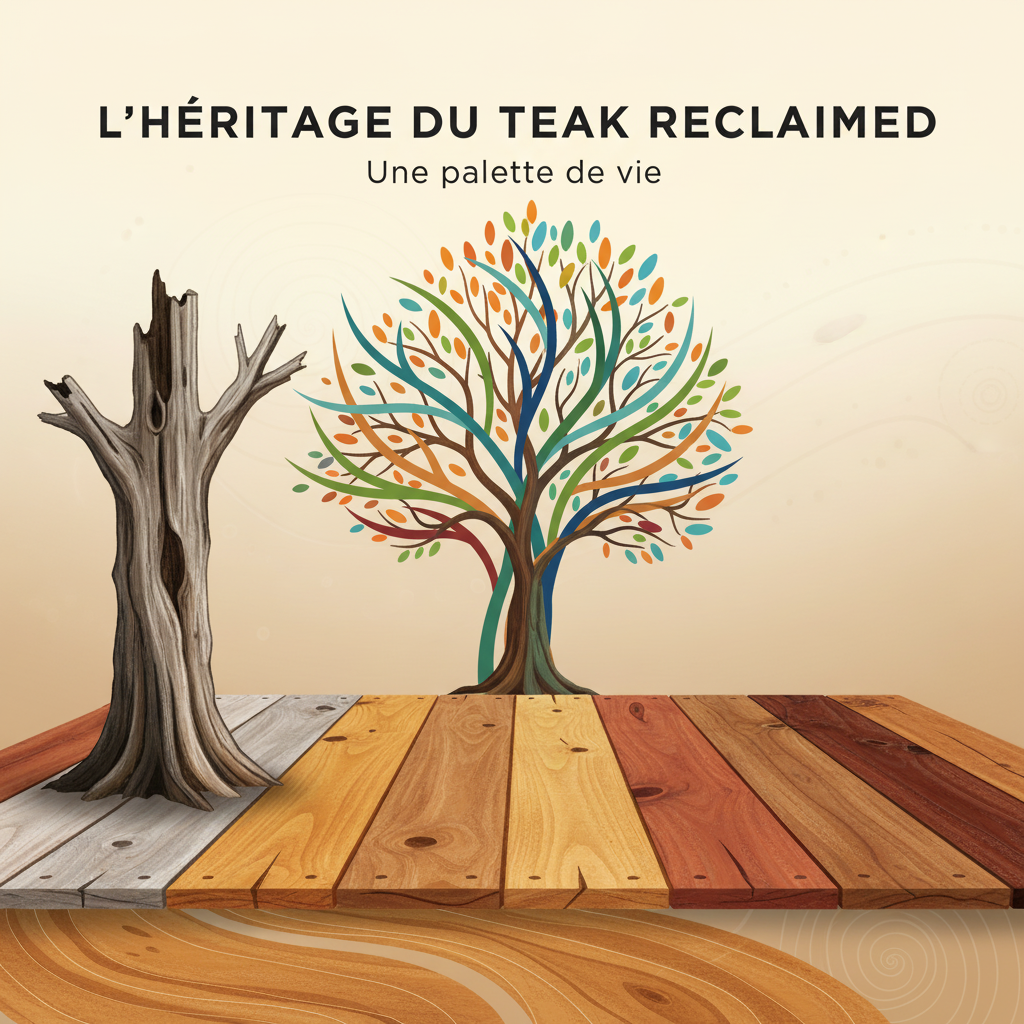
The colour range of reclaimed teak is far broader than that of new wood. Here are some of the most distinctive variations:
✅ Silver-Grey or Platinum Often sourced from boat decks and marine structures, creating a refined silver patina and a weathered elegance that is exceptionally rare.
✅ Golden and Tawny Browns Warm, sun-ripened hues with a deeper intensity achieved through years of natural oxidation.
✅ Dark Brown and Chocolate Timber saturated with oils throughout its history can develop a deep reddish-brown tone, approaching mahogany.
✅ Olive-Green or Grey-Green Tones Subtle tints that emerge from prolonged contact with specific environmental conditions soil, moisture, and vegetation.
✅ Dramatic Grain Contrast Striking differences between the heartwood and sapwood create a layered visual texture that is entirely unique to each board.
👉 As noted on the Kitaru blog, new teak presents a uniform golden hue, while reclaimed teak offers rich variation: honey, brown and far beyond.
Factors That Influence Colour
Several elements interact to create this chromatic richness:
Age of the wood The older the timber, the deeper and more complex the tones.
Exposure to elements Sun, rain, and salt air all leave their mark.
Previous use A boat deck develops a very different patina than an interior floor beam.
Part of the tree Heartwood and sapwood respond differently to ageing.
New plantation teak, though durable, can have higher moisture content and a lower oil concentration. This affects its performance over time. Reclaimed teak, by contrast, has already undergone natural stabilisation over generations.
Integrating Reclaimed Teak Colours Into Your Design
The colour diversity of reclaimed teak is an inexhaustible source of character. It allows you to create a floor with a personality and depth that uniform, factory-produced materials simply cannot offer.
Lighter tones (silver-grey, honey gold) open up a space, reflecting light and lending an airy, coastal feel.
Darker tones (chocolate, deep brown) bring warmth, intimacy, and gravitas to bedrooms, libraries, and living rooms.
Mixed tones create a dynamic, textured surface ideal for designers who embrace organic variation and visual storytelling.
The natural durability of reclaimed teak makes it perfect for hardwood flooring, offering warmth and longevity. Popular for interior cladding, reclaimed teak adds character and a tropical charm to homes, villas, and resorts.
Conclusion
Reclaimed teak flooring is far more than a surface to walk on. It is an investment in history, sustainability, and unparalleled aesthetics. By choosing reclaimed teak, you select a material whose chromatic beauty will only continue to deepen and evolve with time a living element that brings soul, warmth, and story to every space it inhabits.
At Kitaru Lumberyard Bali, we specialize in sourcing and preparing the highest-quality reclaimed teak for residential and commercial projects across Southeast Asia and beyond.
Ready to bring the colours of history into your next project?
Visit the Showroom
Jl. Pantai Saba No.47509, Saba, Kec. Blahbatuh, Kabupaten Gianyar, Bali 80581
Contact Us
Via the Contact page
By email:
info@kitaru-lumberyard-bali.com
By phone:
(+62) 0823 4248 1388 (WA)
Showroom Hours:
Mon to Fri: 8.30AM – 4.30PM
Sat: 8.30AM – 12 noon
(closed Sundays)
Copyright© 2024-2026 PT-PMA BNM Management Solutions. All rights reserved.
Trusted source for sustainable hardwood and quality hardware. We offer reclaimed Bangkirai, Meranti, Teak, and Kapur, plus exclusive decorative pieces in reclaimed Ulin from our partners. Supplying top-tier decking, flooring, and more—get the best quality at the best price.