The Ulin Advantage
Historical structures across Indonesia bear testament to its resilience, with Ulin roofs and foundations often lasting for over a century without chemical treatments. Its natural oils make it a fortress against the tropical climate.
Maintenance Requirements and Cost Implications
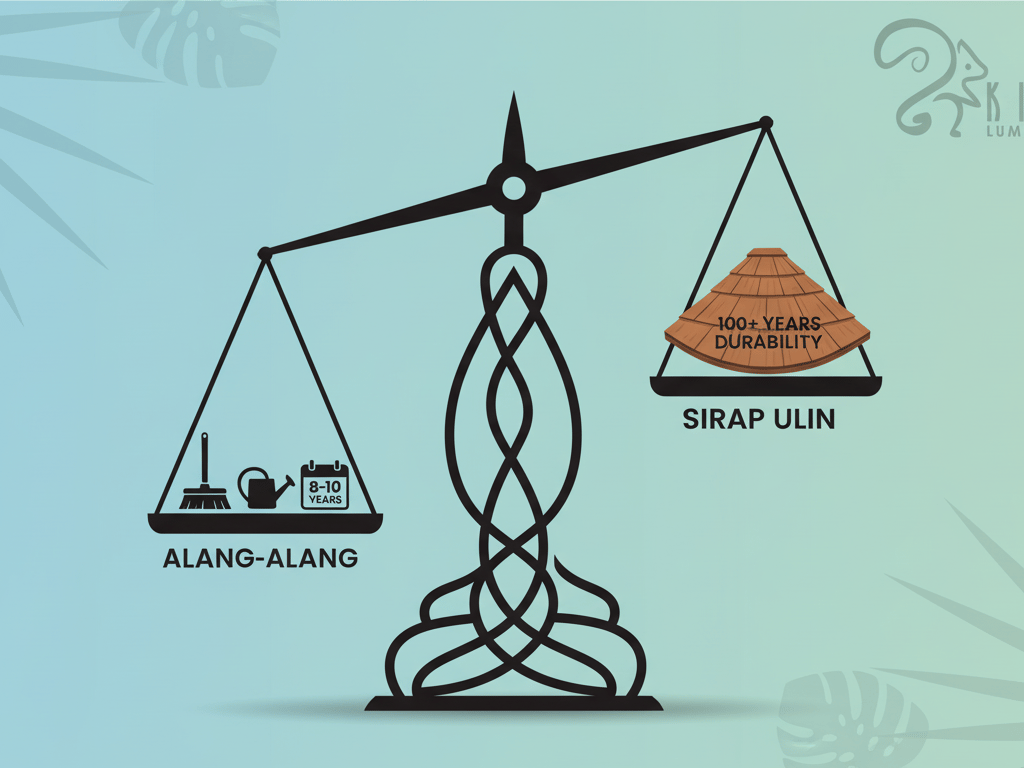
The difference in longevity directly translates to maintenance demands and long-term costs. An Alang-Alang roof necessitates regular upkeep. This includes routine inspections for pests (birds, rodents, insects), mold, and general wear and tear. While the initial installation cost for Alang-Alang might be lower, the cumulative expense of maintenance over 20-30 years can easily surpass the initial savings.
Sirap Ulin, by virtue of its inherent durability, requires significantly less maintenance. Once installed correctly, these ironwood shingles are incredibly resilient. They do not require chemical treatments, pest control, or frequent repairs. This low-maintenance profile means the total cost of ownership is often considerably lower.
Performance in Bali's Tropical Climate
Both materials perform well in providing insulation. Alang-Alang's thick thatch provides excellent natural insulation, helping to keep interiors cool during hot days. However, severe tropical storms with strong winds can be particularly challenging for thatch, potentially leading to leaks.
Sirap Ulin, with its dense composition, also offers good thermal insulation. More importantly, its robust nature provides superior protection against heavy downpours, high winds, and intense UV exposure, offering a solid, impenetrable barrier against the elements.
Conclusion: Weighing Your Priorities
The choice between Sirap Ulin and Alang-Alang for your Bali villa roof ultimately hinges on your project's specific priorities, budget, and long-term vision.
Go with Alang-Alang if:
You desire a raw, bohemian, or quintessential rustic vibe.
Upfront budget is the primary constraint.
The project is temporary or designed for a 10-year refresh cycle.
Go with Sirap Ulin if:
You prioritize longevity and a "legacy" build.
You want a sophisticated, modern-natural aesthetic.
You seek a low-maintenance, high-performance tropical solution.