

Wabi-Sabi in Bali: Why Imperfect Wood Is the New Standard of Tropical Luxury
A New Aesthetic Is Quietly Taking Over Bali's Most Prestigious Villas Walk into any newly completed luxury villa in Canggu or Ubud right now, and something feels different. The surfaces are raw. The wood is aged, visibly marked by time. The grain is deep and imperfect. Nothing looks factory-finished, and yet everything looks extraordinary. This is not an accident. This is Wabi-Sabi. Heading into 2026, design tastes in Bali are shifting fast. Buyers are craving more soul and sustainability. The era of sterile, over-polished interiors is giving way to something far more meaningful: spaces built from materials that carry a history, that breathe, that age gracefully in the tropics. And reclaimed wood is at the center of it all.
4/20/20266 min read
What Is Wabi-Sabi, and Why Does It Matter in Bali?
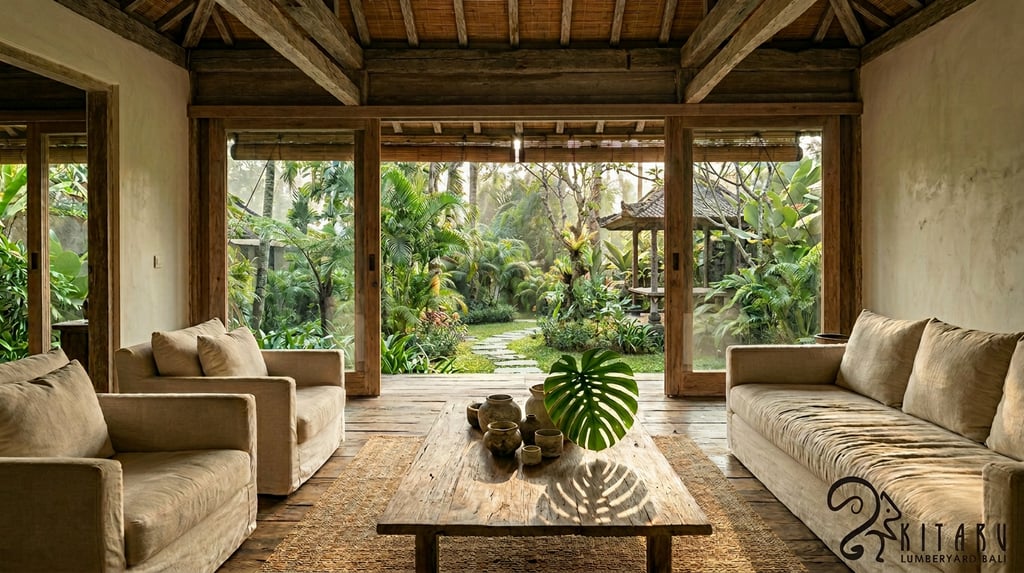
Wabi-Sabi is a Japanese-inspired design philosophy built on three core ideas: the beauty of imperfection, the value of impermanence, and the power of simplicity. It is raw concrete, neutral linen, handmade ceramics. And above all else, it is aged, weathered wood.
This philosophy is not new. But its application in Bali's luxury villa market is exploding right now.
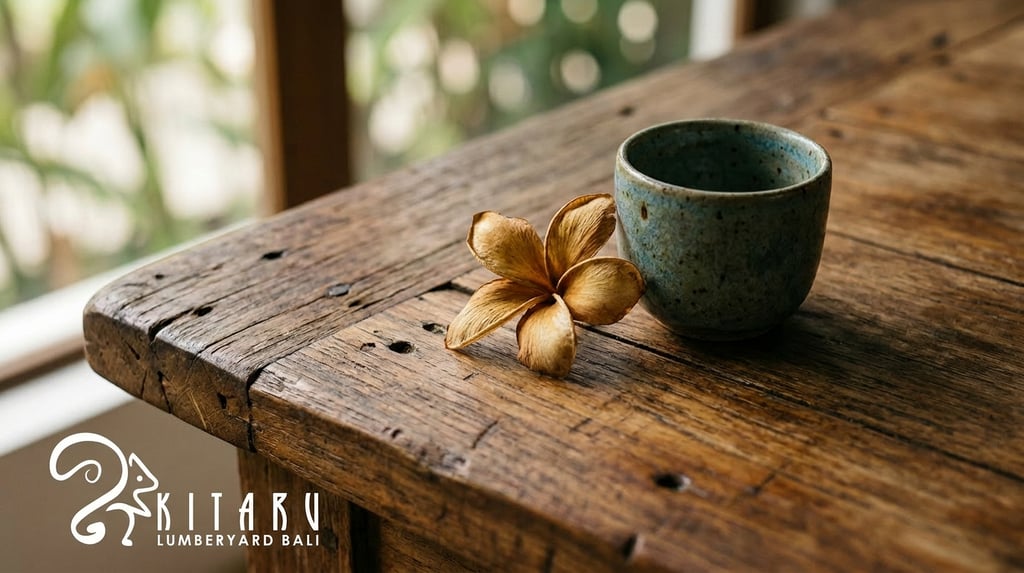
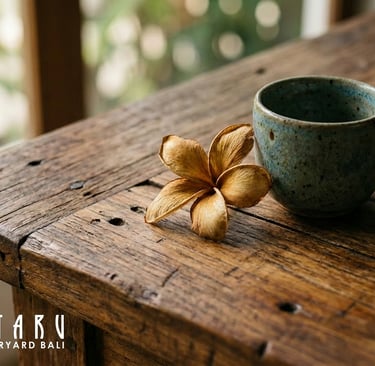
The appeal lies in its effortless harmony with nature, making it the perfect aesthetic for modern Bali villas that prioritize tranquility and simplicity. In a design world saturated with perfection, people are craving authenticity. Unlike pristine, factory-made surfaces, each reclaimed piece is utterly unique. The nail holes, weathered grain, saw marks, and occasional knots are not flaws. They are features that tell a story.
Bali, with its centuries of timber craftsmanship, its Javanese joglos, its colonial warehouses, and its rich forest heritage, offers the most extraordinary raw material in the world for Wabi-Sabi design: reclaimed tropical hardwood.
Why Reclaimed Wood Is the Perfect Wabi-Sabi Material
1. Imperfection as Luxury
In 2026, luxury is no longer defined by excess but by ethics and provenance. High-end clients and villa developers are moving away from mass-produced items and toward pieces that carry meaning, authenticity, and a lower environmental footprint.
Reclaimed teak, Bangkirai, Ulin, and Kapur are imperfect by nature. Their surfaces carry the marks of previous lives: the grain patterns of 60-year-old growth, the gentle discoloration of decades under tropical sun, the texture of timber that has already proven itself against Bali's monsoons and humidity.
This connection to the past adds a layer of depth and narrative to interior spaces that simply cannot be replicated. A villa floor in reclaimed teak is not just a surface. It is a material that once supported a colonial-era building or sailed across the Java Sea. That is not an imperfection. That is an asset.
2. The "Wood Drenching" Trend, Elevated by Reclaimed Species
One of the standout global design trends right now is "wood drenching": rooms enveloped in warm wood tones, from floors and walls to ceilings and built-ins. It creates a cohesive, grounding environment that feels both timeless and deeply connected to nature.
Applied in a Balinese luxury villa context, wood drenching becomes something truly spectacular. Imagine reclaimed teak flooring meeting aged Bangkirai wall paneling, topped with Kapur ceiling beams still carrying the marks of their previous structure. Every surface breathes warmth. Every corner tells a story.
This is not mass-market design. This is the kind of interior that ends up in architectural publications.
3. Biophilic Design and the Need for Organic Materials
Biophilic design, emphasizing a connection to nature through organic materials, is on the rise globally and is becoming a core principle of Bali's most ambitious villa projects. Reclaimed wood is a key material in this trend, used to create feature walls, exposed structural elements, custom furniture, and outdoor living spaces.
Pairing reclaimed wood with indoor tropical plants and natural light helps bring the outdoors in, promoting a sense of well-being and harmony. In Bali, where the line between interior and exterior already blurs by design, this philosophy finds its most perfect expression.
How Wabi-Sabi Translates Into Real Villa Design Decisions
🏠 Raw, Aged Flooring Over Polished Surfaces
The shift is clear: developers and architects are choosing reclaimed teak and Bangkirai floors with visible natural patina over perfectly lacquered alternatives. Lighter finishes and natural oils are enhancing the beauty of reclaimed wood while making villa interiors feel more spacious and calming. The wood is not hidden. It is celebrated.
🪵 Exposed Ceiling Beams as a Signature Element
Exposed ceiling beams crafted from reclaimed wood are becoming a must-have in Bali's most coveted villa projects. These beams add architectural interest and a sense of grandeur to both rustic and contemporary spaces. Developers are choosing lightly treated beams to highlight the natural imperfections and history of the wood rather than obscuring them.
In practical terms, Kitaru's reclaimed Kapur and Ulin are ideal for this application: dense enough for structural use, visually spectacular, and naturally resistant to the tropical environment without any chemical treatment.
🌴 Outdoor Living Spaces Built to Last and to Age
The Wabi-Sabi approach is particularly powerful in outdoor spaces. Reclaimed Bangkirai decking, reclaimed Ulin pergola structures, and sirap ironwood shingle rooflines all embrace the philosophy of aging beautifully. These are materials that do not fight the tropical climate. They evolve with it.
Ulin ironwood in particular tells the most powerful Wabi-Sabi story of all: a material so dense, so naturally resilient, that it requires no treatment and actually hardens further over time. Its surface weathers into extraordinary silver and charcoal tones that no artificial finish can replicate.
🏗️ Structural Elements That Become Decorative Statements
In 2026, design is tactile. Architects are looking for vertical and structural surfaces that change as the light moves across the room throughout the day. Reclaimed timber columns, door frames in aged teak, and raw wood staircases all serve this function.
In Bali's best new villas, the structure of the building is no longer hidden. It is the design.
The Wabi-Sabi Villa: Species Guide for Authentic Imperfection
SpeciesWabi-Sabi QualityBest ApplicationReclaimed TeakDeep grain, golden-to-silver patina, aged nail holesFlooring, paneling, custom furnitureReclaimed BangkiraiDense texture, golden-brown warmth, weathers beautifullyDecking, outdoor structures, facadesReclaimed KapurReddish-brown tones, aged grain characterExposed beams, trusses, structural columnsReclaimed MerantiVariable warm spectrum, subtle imperfectionsWall cladding, cabinetry, decorative screensReclaimed UlinDarkens and hardens with age, extraordinary densityPergolas, shingles, marine-grade applications
Each of these species, sourced responsibly from East Kalimantan and Central Java by Kitaru, brings its own Wabi-Sabi narrative. None of them look the same twice. None of them can be replicated by a factory.
Sustainability Is Not a Feature. It Is the Foundation.
The Wabi-Sabi movement and the sustainability movement are inseparable in 2026. Sustainability is no longer a buzzword. It is a baseline expectation for luxury clients.
There is a growing rejection of disposable renovation: cheap materials that need replacing in five years. The philosophy of Wabi-Sabi aligns perfectly with this rejection. Reclaimed wood is the ultimate sustainable building material. It is repurposed, reducing the demand for fresh logging, and it is incredibly durable because it comes from old-growth trees harvested decades ago.
Since reclaimed wood bypasses the logging and intensive processing required for new timber, it represents a significant step toward reducing a villa project's overall environmental impact. For architects and developers working on internationally marketed luxury properties in Bali, this is no longer optional. It is expected.
Kitaru provides verified origin documentation for all reclaimed species, ensuring full traceability and compliance with legal sourcing standards. In a market where discerning international buyers ask questions about where their materials come from, this level of transparency is a decisive competitive advantage.
Who Is Choosing Wabi-Sabi in Bali Right Now?
The answer is: everyone at the top of the market.
Eco-conscious design is not just a trend. It is the new standard. Villas built now are using reclaimed wood, sustainable bamboo, solar energy, and rainwater collection systems. Modern tropical design has emerged as the dominant architectural style, capturing 42% of the market share in 2025.
Teak wood remains the cornerstone of luxury villa construction, with usage increasing from 45% to 52% over the past five years. The most successful villa developments in Seminyak, Ubud, and Canggu are those that honor Balinese philosophical traditions while embracing 21st-century sustainability standards.
The Wabi-Sabi villa is not a niche product. It is where the mainstream of Bali's luxury market is heading.
Beyond Materials: The Kitaru Partnership
Designing a Wabi-Sabi villa in Bali is a creative and technical undertaking that demands the right partner. Species selection, surface treatment decisions, structural applications, and long-term performance in a tropical climate all require deep expertise.
Kitaru Lumberyard Bali works alongside architects, interior designers, and villa developers at every stage of this process. From identifying the right reclaimed species for a specific aesthetic vision to ensuring structural suitability and sourcing documentation, Kitaru brings both the material and the knowledge.
Purchasing reclaimed wood through Kitaru means supporting ethical sourcing practices, local artisanal expertise, and a supply chain built on full transparency. In 2026, that is not just good design. That is good business.
The Most Beautiful Thing About Wabi-Sabi Is Also the Simplest
It celebrates what already exists.
Reclaimed wood does not try to be perfect. It does not pretend to be new. It arrives in your villa already carrying decades of character, density, and natural resilience. It improves with time. It becomes more beautiful as the years pass.
In a world of mass production and disposable luxury, that is the rarest quality of all.
Reclaimed wood is not just the material of the Wabi-Sabi movement in Bali. It is its truest expression.
Ready to bring the Wabi-Sabi philosophy to your next villa project?
Kitaru offers expert consulting tailored to your architectural vision, premium reclaimed hardwood sourced ethically from across the Indonesian archipelago, and bespoke solutions for luxury villas, boutique resorts, and hospitality landmarks throughout Bali and beyond.
📍 Visit the Kitaru Lumberyard Bali showroom 📞 Call: +62 0823 4248 1388 (WA) 📧 Email: info@kitaru-lumberyard-bali.com 🌐 www.kitaru-lumberyard-bali.com
Let's build something imperfectly beautiful, together.
Visit the Showroom
Jl. Pantai Saba No.47509, Saba, Kec. Blahbatuh, Kabupaten Gianyar, Bali 80581
Contact Us
Via the Contact page
By email:
info@kitaru-lumberyard-bali.com
By phone:
(+62) 0823 4248 1388 (WA)
Showroom Hours:
Mon to Fri: 8.30AM – 4.30PM
Sat: 8.30AM – 12 noon
(closed Sundays)
Copyright© 2024-2026 PT-PMA BNM Management Solutions. All rights reserved.
Trusted source for sustainable hardwood and quality hardware. We offer reclaimed Bangkirai, Meranti, Teak, and Kapur, plus exclusive decorative pieces in reclaimed Ulin from our partners. Supplying top-tier decking, flooring, and more—get the best quality at the best price.