Bangkirai or Ulin for a Pool Deck in Bali: How to Compare the Options
A pool deck has to work as part of an outdoor living space. It frames the pool, connects the house to the garden and receives regular exposure to sun, rain and splashing water. The timber choice matters, but it is only one part of a successful deck.
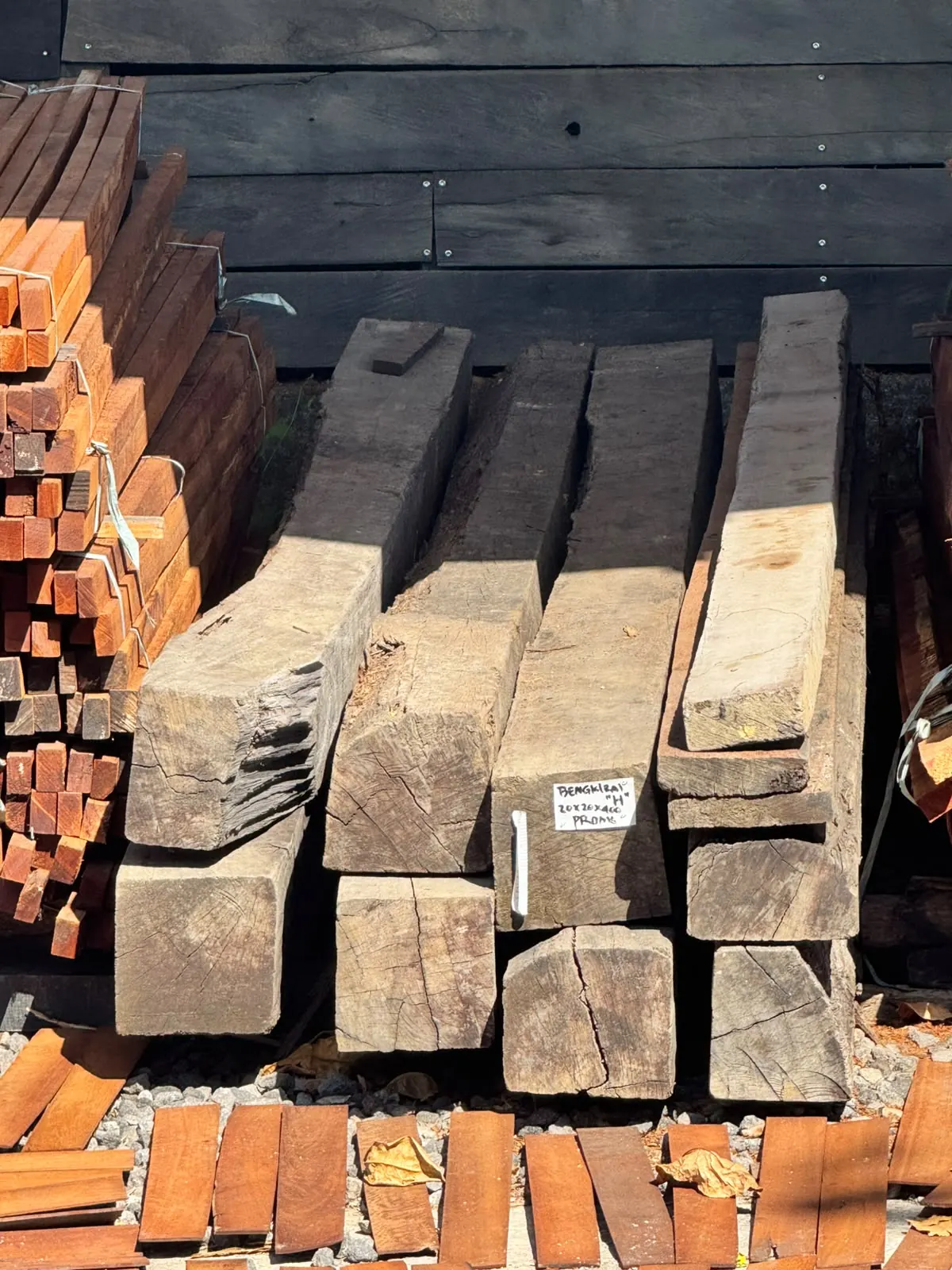
A pool deck has to work as part of an outdoor living space. It frames the pool, connects the house to the garden and receives regular exposure to sun, rain and splashing water. The timber choice matters, but it is only one part of a successful deck.
Bangkirai and Ulin are two hardwood options that may be considered for exterior projects in Bali. They are different materials, with different appearances and working characteristics. Rather than assuming that one is always the right choice, it is more useful to compare them against the design, the exposure and the specification prepared for the project.
Start with the design and the site
Before choosing a species, consider how the pool area will be used. Is the deck a small private terrace, a large entertaining area or a route that connects several parts of the property? Is it exposed to direct sun throughout the day? Is it close to the sea, partly sheltered or surrounded by landscaping?
These details influence the material specification and the design of the complete deck. They also help the architect or installer determine the appropriate board dimensions, spacing, support system and fixing method.
A pool deck should not be specified from a timber name alone. The complete system needs to be suitable for the actual conditions and intended use.
Understanding Bangkirai
Bangkirai is a tropical hardwood used for a range of exterior applications, including decking. It can be considered where the project calls for a hardwood surface and where its available dimensions and appearance suit the design.
As with any natural timber, the actual boards should be assessed rather than relying only on a general description of the species. Colour, grain, dimensions and stock availability can vary. The finished appearance will also depend on the selected profile, board arrangement and exposure.
If a project needs a particular shade or a very consistent surface, discuss that requirement before the material is ordered. A reference photograph can help explain the desired look, but natural timber should not be expected to reproduce a perfectly uniform colour.
Understanding Ulin
Ulin, botanically known as Eusideroxylon zwageri, is a dense hardwood widely associated with demanding tropical construction applications. Its distinctive character and weight make it a material that should be considered carefully in the context of the whole project.
Ulin is not a universal solution simply because it has a strong reputation. Its weight, machining requirements, available dimensions and the design of the supporting structure all need to be considered. The actual stock and finished profile should be confirmed before the specification is finalised.
For a pool deck, the relevant question is not only whether Ulin is suitable as a visible board. The architect or installer must also consider the supports, fixings, drainage and the way the deck will be used.
Appearance and design
The visible character of the two species can influence the atmosphere of the pool area. The colour and grain of the selected boards, the width of the planks and the direction of the layout all contribute to the final result.
A wide, simple deck can create a calm architectural surface. A more detailed layout, borders or transitions can make the timber a stronger design feature. Reclaimed timber may introduce additional variation and marks, while new stock may offer a different appearance depending on the batch and preparation.
If the deck connects to interior flooring or other timber elements, consider the relationship between those materials. They do not have to match exactly, but the transition should feel intentional.
Do not overlook the supporting structure
A deck is not just the boards underfoot. Joists, bearers, posts, supports, fixings and connections are part of the system. Their specification matters even when they are not visible.
The supporting structure must be appropriate for the loads, spans, exposure and chosen board system. Fixings need to be compatible with the materials and site conditions. Drainage and ventilation should be addressed in the design. These decisions belong to the architect, engineer or installer responsible for the deck.
A high-quality timber board cannot compensate for an unsuitable support system or poor installation. Equally, hidden components should not be treated as less important because they are out of sight.
Maintenance and the natural ageing of timber
Outdoor timber changes with exposure. Sunlight, rain, moisture and cleaning affect its colour and surface over time. Some owners prefer to maintain a particular appearance with a suitable finish; others accept the natural weathering process.
A finish can influence the look and may help limit the absorption of some substances, depending on the product and application. It does not make timber maintenance-free or guarantee that the surface will never stain or change.
The maintenance approach should be discussed in relation to the chosen species, the pool environment and the owner's expectations. The architect or installer can advise on the complete system and the maintenance requirements.
How to choose between Bangkirai and Ulin
A useful comparison should consider:
- the appearance the project is trying to achieve;
- the required finished dimensions and profile;
- the actual stock and quantities available;
- the weight and preparation requirements of the selected timber;
- the supporting structure and fixing specification;
- the exposure, drainage and maintenance plan.
There is no reliable shortcut that replaces this project-specific review. A species that suits one pool deck may not be the best choice for another.
Kitaru can discuss the timber options and the available dimensions. The final technical specification and installation details should be confirmed by the professionals responsible for the project.
FAQ
Is Ulin always better than Bangkirai for a pool deck?
No single species is automatically best for every project. The design, exposure, stock, dimensions and complete support system all matter.
Can I choose based only on colour?
Appearance is important, but the project specification should also consider dimensions, availability, structure, fixings and maintenance.
Can Kitaru advise on the installation spacing?
Kitaru can discuss timber options and profiles. Spacing, supports, fixings and drainage should be specified by the architect or installer responsible for the deck.
Can I send photos of my pool area?
Yes. Photos and drawings are useful for an initial discussion. A cutting list prepared and checked by the responsible professional is normally required for a precise timber quotation and order preparation.
Discuss your pool deck with Kitaru
Planning a pool deck in Bali? Contact Kitaru to discuss the timber options for your project, including Bangkirai and Ulin, and the appearance you would like to achieve. Photos and project plans are welcome for an initial discussion. For a precise quotation and order preparation, please provide the cutting list prepared by your architect or installation professional.
Request current stock
Tell us the species, dimensions and quantity. We reply with what is available now.
Send your drawings
Architects, designers and contractors: share plans and quantities and we will come back with a tailored proposal.
Visit by appointment
We are open Monday to Friday 8:30–16:30 and Saturday 8:30–12:00 (closed Sundays). Visits to the lumberyard and showroom are by appointment only.