
Living with Exterior Timber in Bali: What Should Owners Expect?
Exterior timber can bring warmth and character to a Bali project. Learn how exposure, weathering, maintenance and installation affect what owners should expect.
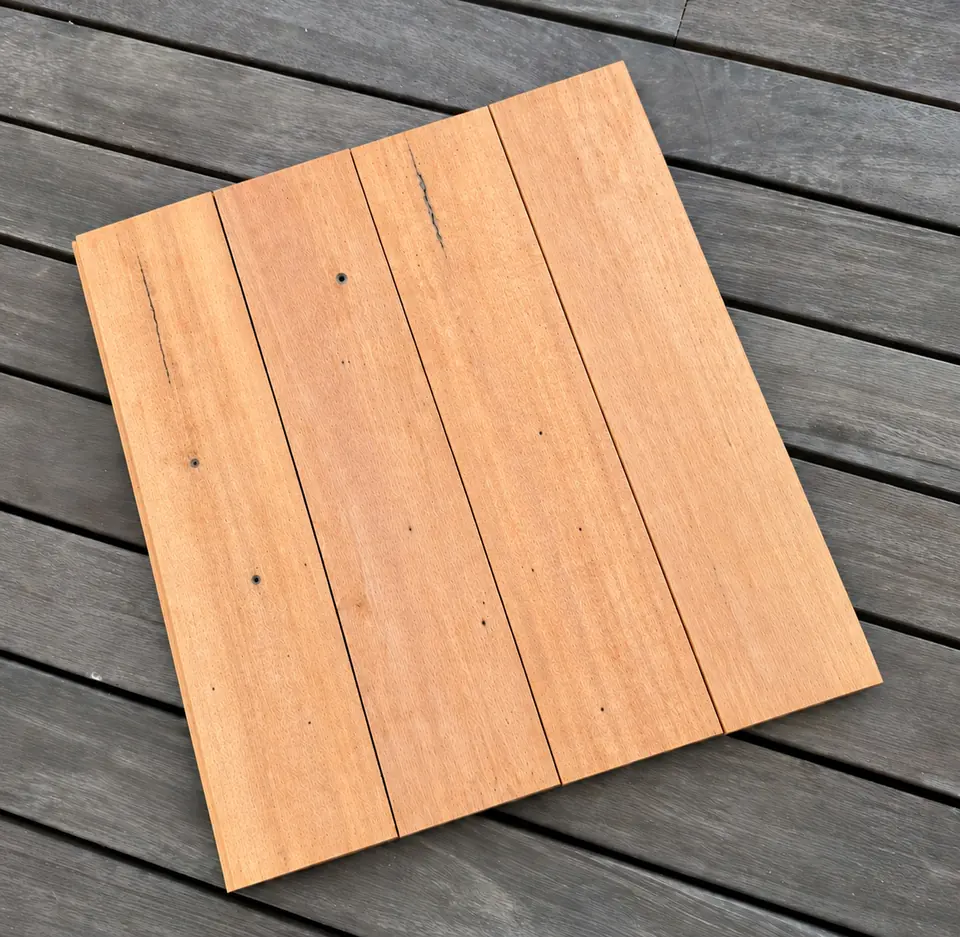
Timber can bring warmth, texture and a natural character to outdoor spaces. In Bali, it is used in a wide range of settings, from decks and terraces to facades, shaded areas and architectural details.
But exterior timber is not a material that stays unchanged. Sun, rain, humidity, coastal exposure, the design of the structure and the way the surface is maintained all influence how it evolves over time.
Choosing timber for an outdoor project therefore involves more than selecting a species or a colour. It means understanding the conditions in which the material will be used and making realistic decisions about its appearance, maintenance and installation.
At Kitaru Lumberyard Bali, we work with reclaimed hardwood and new timber for a variety of applications. Here are some useful points to consider before choosing timber for an exterior project.
Start with the location, not just the species
A deck beside a swimming pool does not face exactly the same conditions as a covered terrace. A facade exposed to afternoon sun is different from a sheltered wall. A coastal property may also have different exposure from a project further inland.
Before choosing the timber, consider where it will be installed:
- Is the area fully exposed to sun and rain?
- Is it protected by a roof or overhang?
- Is it close to the sea?
- Will it be used as a walking surface, cladding or a decorative feature?
- Can water drain away freely?
- Is the area easy to access for inspection and maintenance?
These questions help define the project. They also help the architect or installation professional assess the structure, spacing, fixing method and other details that affect the finished work.
There is no single timber choice or installation detail that should be treated as correct for every outdoor situation.
Understand that timber changes with exposure
Outdoor timber is exposed to changing conditions. Its colour and surface appearance may evolve with sunlight, rain, moisture, the finish applied and the maintenance it receives.
Some owners appreciate the way timber develops a more weathered appearance. Others prefer to maintain a more consistent colour. Neither expectation should be treated as automatic: the result depends on the species, the particular material, the exposure and the care given to it.
A finish can influence the appearance and help manage the surface, but it should not be presented as a guarantee that timber will never change, stain or suffer damage.
If maintaining a particular appearance is important, discuss the finish and maintenance approach before the material is ordered. Ask which products are appropriate for the timber and the conditions of the project. The supplier of the finish and the professional responsible for its application should confirm the relevant instructions.
The structure matters as much as the boards
When people plan a deck or facade, they often focus first on the visible timber. But the finished result also depends on what supports it.
For decking, the substructure, joist arrangement, spacing, drainage, fixings and installation all need to be considered. For cladding, the supporting frame, ventilation requirements, fixing details and exposure conditions are part of the design.
The timber itself cannot compensate for an unsuitable structure or incorrect installation.
This is why Kitaru does not treat a timber species as a complete solution to every outdoor application. The architect, engineer or installation professional should determine the structural and installation details according to the project.
A photograph or drawing is a useful starting point for discussing the visible timber. The technical design and the final quantities must be checked by the professional responsible for the work.
Choosing between reclaimed and new timber
Reclaimed hardwood remains at the heart of Kitaru's identity. Its previous use gives it a distinctive appearance, with variations in colour, surface, marks and dimensions. For projects where character and variation are part of the design, reclaimed timber may be an interesting option.
New timber can be suitable when a project needs particular sections, larger quantities or a more consistent appearance. It provides another way to approach the design rather than a lesser version of reclaimed material.
For an exterior project, the decision should be made according to the actual application, the material available and the design requirements. The appearance and condition of reclaimed boards can vary, so the material should be reviewed in relation to the intended use.
A project may also combine reclaimed and new timber. For example, one element may use reclaimed material while another uses new timber. If this is the intention, each category should be identified clearly in the quotation.
Think about maintenance before the project is finished
Maintenance is easier to plan when it is considered from the beginning.
Ask the professional responsible for the project what inspection and care will be appropriate for the timber, finish and exposure conditions. The answer may differ between a covered area, a fully exposed deck and an exterior facade.
It is also useful to understand that maintenance is not simply a matter of applying a product once. The condition of the surface, the surrounding environment and the products previously used can all affect what should be done later.
Avoid relying on general promises such as “maintenance-free” or “permanent colour”. Exterior timber should be selected with realistic expectations about how it may evolve and what care it may require.
Make the decision with the whole project in mind
A good timber choice brings together appearance, application, material availability and installation requirements.
Before requesting a quotation, prepare the information that will help the supplier understand the project:
- The application: decking, cladding, terrace, facade or another exterior feature.
- The location and exposure: coastal, sheltered, covered or fully exposed.
- The intended appearance: reclaimed character or a more consistent new timber surface.
- The species and section under consideration, if already specified.
- Drawings, photographs and preliminary dimensions.
For an accurate quotation and order preparation, the final quantities should be prepared and checked by the architect or installation professional responsible for the project.
FAQ
Will exterior timber keep its original colour in Bali?
Not necessarily. Its appearance can change with species, sunlight, rain, exposure, finish and maintenance. Discuss the expected appearance and care requirements before choosing the material.
Is reclaimed timber suitable for outdoor use?
Suitability depends on the particular material, its condition, the intended application and the project details. The timber should be assessed for the use proposed rather than assuming that every reclaimed board is suitable for every exterior situation.
Does a hardwood deck need a particular structure?
Yes. The supporting structure, spacing, drainage and fixings must be designed for the project. These details should be confirmed by the architect, engineer or installation professional.
Does applying a finish prevent all weathering?
No finish should be presented as a guarantee against all changes, stains or damage. A finish can influence the surface and its appearance, but its performance and maintenance requirements depend on the product and conditions.
Can Kitaru supply reclaimed and new timber for the same exterior project?
Yes. A project can combine both materials. Each should be identified separately in the quotation, with availability and suitability considered for the intended application.
Planning an exterior timber project in Bali?
Contact Kitaru Lumberyard Bali to discuss the timber options for your deck, facade, terrace or other outdoor feature. Send us photographs, drawings and information about the location and exposure. We can discuss reclaimed and new timber, review the sections you are considering and confirm what is possible for your project. For an accurate quotation and order preparation, the final cutting list should be prepared and checked by your architect or installation professional.
Request current stock
Tell us the species, dimensions and quantity. We reply with what is available now.
Send your drawings
Architects, designers and contractors: share plans and quantities and we will come back with a tailored proposal.
Visit by appointment
We are open Monday to Friday 8:30–16:30 and Saturday 8:30–12:00 (closed Sundays). Visits to the lumberyard and showroom are by appointment only.